One beautiful, recent workday, I sat stumped at my computer about the best next move.
I was in the middle of a market analysis. The QC I was running on data from one of the big data companies didn’t look right. I worked all through the weekend. It was Tuesday but felt like Friday. My friend called unexpectedly. Could I play an hour of tennis instead?
I jumped at the chance.
Here’s why: we all need to clear our heads from time to time to work better and to live well. How can we improve the broader human condition if we’re in poor shape ourselves?
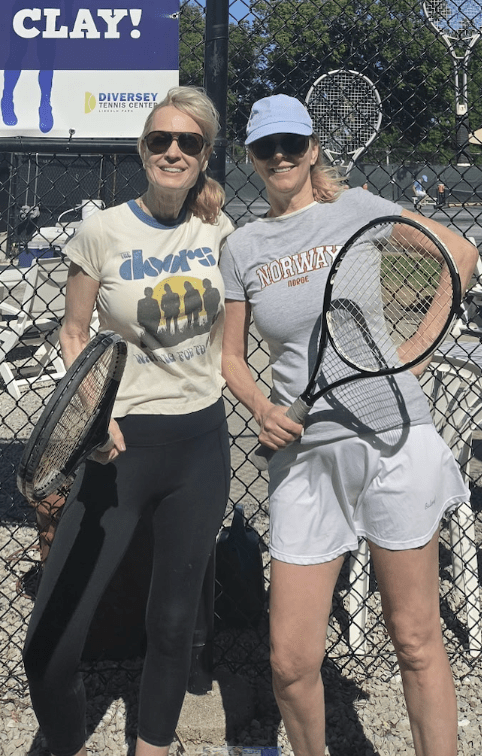
Emerging research has associated tennis and other racquet sports with longer life expectancy, adding to the growing body of evidence that regular physical activity can support healthy aging.
There are obvious physical benefits to playing tennis. You move, balance, react, stretch, and build strength. Tracking a fast-moving ball and executing a response keeps your mind engaged.
But lately I see tennis as something more than a fun sport that’s good for my health. It’s also a practice in positivity, concentration, and living in the moment.
This is the “inner” game of tennis.
Tennis invites us to strategically respond rather than simply react. It requires a neutral type of self-awareness and grounded but open concentration. Most importantly, it repeatedly teaches us how to deal with circumstances that are not going our way.
And there’s a lot of that these days, on and off the court.
Examples in my work life include the USDA cancelling its annual Hunger Survey and changes affecting families in need. [Read my response here.]
You can use a similar practice in your professional work: clear your mind, observe what is happening, and create effective solutions when the going gets tough or tougher.
How we respond can be the real game-changers.
The Mental Game Is Important
Tennis offers wonderful practice in mind management.
W. Timothy Gallwey’s The Inner Game of Tennis explores the idea that peak performance can come from quieting the overactive, judging mind, what he calls Self 1, and allowing Self 2, our more natural and intuitive abilities, to take over.
How often do we judge ourselves harshly when the ball goes out of bounds? Does tripping over our constant nagging thoughts make our performance better or worse?
Tennis gives us an opportunity to practice something different: observe, adjust, and move on to the next point.
Again, this idea applies far beyond tennis.
Quiet the Inner Critic
Self 1 is the inner critic, the voice that tells us whether we are doing something “right” or “wrong.” It likes to prattle on constantly.
On the court, quieting the inner critic can mean focusing on the ball, your breathing, or your next shot instead of thinking, “I can’t believe I missed that.”
This critic can also be pointed outward at other people and situations. If it reacts too quickly, it can make a bad situation worse.
By instead observing, adjusting, and responding effectively, we have the potential to move ahead productively in the face of disappointment and setbacks.
Tennis and Longevity
One of the simplest ways tennis can support healthy aging is through movement, ball tracking, balance, coordination, agility, and strength.
Unlike some forms of repetitive exercise, tennis continually changes. Like in life, you must be ready for the unexpected. The ball comes at different speeds, angles, and surprise locations. Your opponent changes strategy. You must adjust.
That variety keeps both the body and mind engaged.
For older adults, maintaining mobility, balance, and physical activity can be an important part of staying independent and maintaining quality of life.
But longevity is about more than simply adding years. It is also about staying active, connected, mentally engaged, and curious throughout those years.
Start Where You Are at Any Age
One of my favorite passages from The Inner Game of Tennis is Gallwey’s rose-seed metaphor.
A rose seed is not criticized for being small or incomplete. It contains all its potential even while still developing.
The same can be true for all of us.
I would probably be a much better tennis player if I started when I was a lot younger. But I’m still a good tennis player enjoying the benefits of the game. I work to improve myself. I have potential, and I will keep getting better.
Instead of over-judging, get out there and play.
If you miss a point, observe what happened, learn from it, and keep going.
That may be one of the most valuable lessons tennis offers for longevity: stay engaged in the process rather than becoming consumed by a single outcome along the way.
Longevity Is About More Than Living Longer
When we talk about longevity, I think it is important to consider what we mean.
Living longer is one thing. Living well for as long as possible is another.
That means maintaining physical activity, relationships, mental engagement, curiosity, independence, and a sense of purpose.
Tennis can bring many of these pursuits together.
The worst behavior I’ve witnessed firsthand on the tennis court has been occasional foul language from another player, usually directed at himself because he missed a shot, or someone throwing his racquet. The people I play with just want to move and have fun. When our opponents make a fantastic shot, we usually express our admiration.
For me, that makes tennis much more than a sport.
What Tennis Has Taught Me About Life
The older I get, the more I appreciate activities that require me to be present.
Tennis doesn’t allow much time to dwell on the past. You missed the shot, and the next one is coming.
Life is not so different.
We make mistakes. Circumstances change. Plans don’t always work.
Time to adjust our strategy and try again.
Perhaps longevity isn’t simply about finding ways to add more years to our lives. Perhaps it is also about finding ways to remain curious, connected, active, and engaged throughout those years, and to keep our cool during the rare times we might encounter poor sportsmanship or behavior.
No matter how good we are, tennis reminds us that we are always students of the game and of life, and that we can constantly strive to be our best selves.
About Mari Gallagher
Mari Gallagher is the founder and principal of Mari Gallagher Research & Consulting Group and a nationally recognized expert in food access, grocery market analysis, neighborhood markets, hyperlocal data modeling, and community health.
She popularized the term “food desert” and motivated Congressional action. Mari also develops hyperlocal models such as the Meal Deficit Metric, which measures net missing meals after accounting for the many ways households obtain food.
Her work examines how the places where we live, shop, work, and access essential resources can influence health and quality of life. Through research, data, community-level analysis, and strategy, Mari helps organizations better understand local conditions and improve quality and length of life.
And, personally, Mari practices what she advocates for a healthy and engaged life. This includes meditation, swimming with her dog, walking in nature, and, yes, playing tennis.
Connect With Mari
Whether you are interested in Mari’s research on food access and community health, her work with hyperlocal data and market analysis, or simply want to connect about one of the ideas explored here, she welcomes the conversation.
Have a question, research idea, or community issue you’d like to discuss?
Email Mari directly at Mari@MariGallagher.com.
